
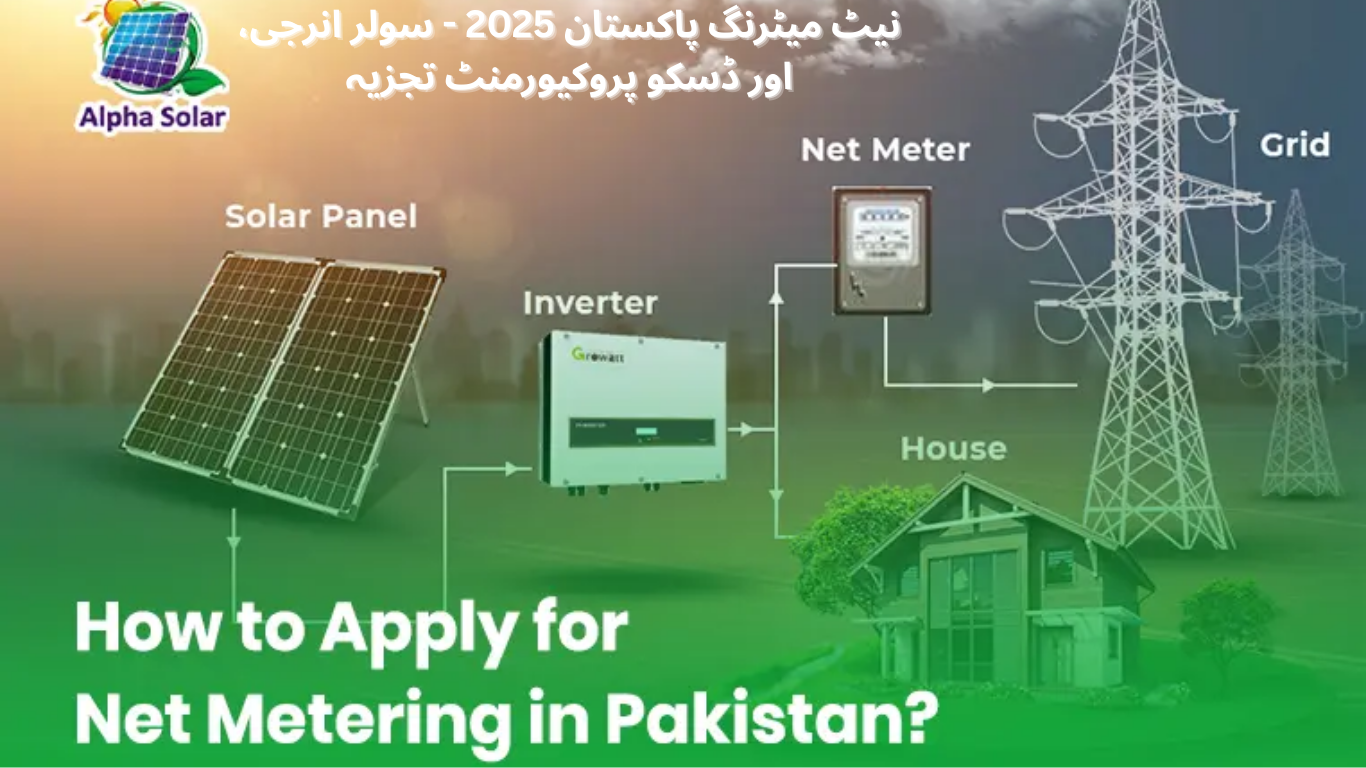
The transition to solar energy in Pakistan is fundamentally changing the electricity industry there. More and more customers are embracing net metering to lower their electricity bills while supporting clean energy. NEPRA is keeping an eye that the compliance should be fair while implementing the same.
It also covers the entire summary of net metering increase, fuel charge adjustment (FCA), and DISCO procurement data, and power generation mix in Pakistan for 2025.
What is Net Metering?
Net metering is a billing arrangement that lets electricity consumers who generate power on-site — usually with rooftop solar systems — shove surplus energy back to the grid. And consumers are vested for this energy which leads to saving on their electricity (monthly) bills and overall dependence on thermal power.
Key Benefits:
- Lower electricity bills for consumers
- Reduced reliance on fossil fuels
- Encouragement of renewable energy adoption
- Fuel-cost recovery stabilization for electric companies
Companies (DISCOs).
NEPRA Warnings and Regulatory Oversight
In October 2025, NEPRA informed the GEPCO for using Advanced Metering Infrastructure (AMI) technology on small meters illegally. The utility had implemented AMI without seeking regulatory consent or backing up sufficient data, which raised some compliance keckles.
NEPRA is there to make sure that net metering systems are installed safely, equitably and in conformity with renewable energy objectives.
Effect of Net Metering on Fuel Surcharge Adjustments (FCA)
Power companies also said the solar net metering was a big respite from steep power rates offering a relief at Rs 0.65 per unit in October 2025.
October FCA Data:
- Actual fuel cost: Rs 8.7177/kWh
- Reference cost: Rs 9.3685/kWh
- Negative FCA: Rs 0.6508/kWh
Total number of units sold: 9.63 billion units
Consumers likely to be benefitted: Approx Rs 6.27 billion
Observation:
There is no fuel cost associated with net-metered solar electricity, so the shared cost of fuel to DISCO’s is diminished.
Monthly Net Metering Procurement (July through October 2025)
Number of Units Purchased: 573.7 million units
| Month | Units (Million) |
| July | 115.095 |
| August | 111.4 |
| September | 142.6 |
| October | Highest |
Month-wise Procurement:
| DISCO | Units (Million) |
| MEPCO | 157.764 |
| IESCO | 139.7 |
| LESCO | 134.255 |
| GEPCO | 57.6 |
| FESCO | 46.5 |
| PESCO | 26 |
| HESCO | 37 + 39 (net inflow) |
| SEPCO | 16.5 |
| QESCO | 17.4 |
| TESCO | 0.59 |
Insight:
Increased purchase from net-metered connections is becoming a major contributor to monthly fuel cost consistency benefiting consumers of all categories.
Energy Mix in Pakistan (October 2025)
| Source | Generation (GWh) | Share | Cost per Unit (Rs) |
| Local Coal | 1,261 | 12.76% | 13.1024 |
| Imported Coal | 466 | – | 14.3874 |
| Furnace Oil | 48 | – | 32.6908 |
| Gas | 905 | 9.16% | 13.3635 |
| RLNG | 1,949 | 19.72% | 21.0611 |
| Nuclear | 2,188 | 22.13% | 2.1728 |
| Wind | 185 | 1.87% | – |
| Bagasse | 40 | 0.40% | 10.7409 |
| Solar | 96 | 0.97% | 0 |
Observation:
- Energy from solar, wind and bagasse is offered free of charge or at low cost leading to less FCA.
- It is the cheapest form of generation – nuclear.
Significance of Solar Net Metering for the Energy Industry
- Replaces expensive thermal generation, reducing power costs.
- Encourages urban rooftop solar adoption.
- Supplies an ongoing, renewable answer to the need of electricity.
Cumulative Procurement (July–October 2025):
- IESCO: 139.7 GWh
- MEPco: 157.7 GWh
- LESCO: 134.2 GWh
Net metering promotes peak-time energy stability, particularly so during the day when solar systems produce power and cut down expensive thermal peak generation.
Investment and Policy Implications
- On that landscape, huge quantities of solar panels are being imported in Pakistan which also indicates the high level of consumer adoption.
- The NEPRA is also mulling over tariff adjustments to ensure that demand-side incentive matches with cost recovery for DISCOs.
- And not just in the price we pay at the pump, or even on our electric bills though those are important but also what we see reflected in stock performances of leading energy companies.
Conclusion
Net metering is transforming the power scenario in Pakistan thanks to:
- Reducing consumer electricity bills
- Lowering FCA for DISCOs
- Encouraging renewable energy adoption
- Promoting energy security and sustainability
Pakistan’s Scope & Advantages of Solar Net Metering With solar net metering becoming popular, Pakistan is gradually moving towards a cheaper and cleaner power generation model — good for both the consumers and power sector.